
Mortgage Qualifying in Davie: Home vs. Rental
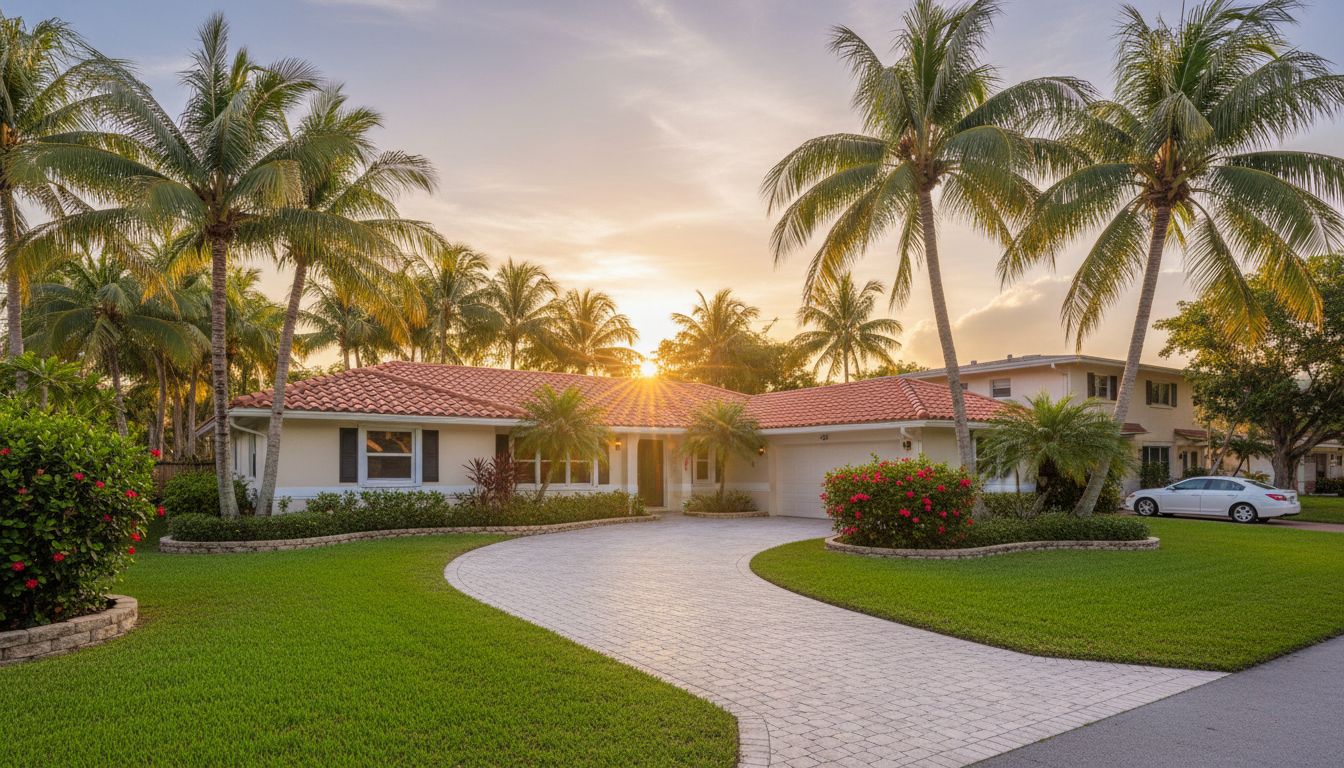
Short answer: you qualify for a Davie mortgage by proving four things to a lender - a credit profile that meets the program's floor, documented income that keeps your debt-to-income ratio inside guidelines, verified cash for the down payment and closing costs, and reserves left over afterward. What changes between a home you will live in and a property you will rent out is how strict each of those four gets. Owner-occupied programs allow the smallest down payments and the most forgiving credit; investment financing asks for more cash up front but can often qualify on the property's projected rent instead of your paycheck. The options worth comparing for a Broward County purchase are FHA, conventional (primary and non-owner-occupied), VA if you are eligible, and DSCR or bank-statement loans for rentals.
- Both paths test the same four items: credit, debt-to-income, cash to close, and reserves.
- Owner-occupied programs generally start near 3-3.5% down; conventional investment financing typically asks for 15-25% down.
- DSCR loans qualify on the property's rent rather than your tax returns, which helps self-employed buyers and repeat investors.
- Occupancy is a loan term, not a preference - a primary-residence loan requires you to actually move in.
- Compare two or three lenders on total cost, not just the quoted rate.
The four things a lender verifies first
Before you tour a single Davie property, understand what underwriting is actually looking at. Program guidelines change, so treat these as the shape of the conversation and confirm current terms with your lender.
- Credit profile. Each program sets a minimum score, and your score also drives pricing. Investment programs generally expect a stronger profile than owner-occupied ones.
- Debt-to-income ratio (DTI). Your proposed housing payment plus existing monthly debts, divided by gross monthly income. Car loans and student loans eat into buying power fast.
- Cash to close. Down payment plus closing costs, documented and sourced. Lenders want to see where the money came from, not just that it exists.
- Reserves. Months of payments left in the bank after closing. Reserve requirements are usually heavier on investment purchases and on multi-unit properties.
- Documentation. Two years of income history in some form, recent bank statements, and for rentals, leases or a market rent analysis.
One Broward wrinkle matters here: your qualifying payment includes property taxes, homeowners and windstorm insurance, flood insurance where it applies, and HOA dues. Those carrying costs are folded into DTI, which is why two buyers with identical incomes can be approved for very different purchase prices depending on the property.
Primary residence financing vs. investment property financing
This is the real fork in the road. The same buyer, the same credit, the same Davie street - two completely different sets of requirements depending on whether you will live there.
| Criteria | Primary residence | Investment property |
|---|---|---|
| Cash up front | Lowest. FHA starts around 3.5% down; conventional can start near 3-5% for qualified buyers. Gift funds are often allowed. | Higher. Conventional non-owner-occupied typically runs 15-25% down, and more units usually means more down. |
| How you qualify | Your personal income and DTI. Pricing is generally the most favorable tier available to you. | Personal income, or the property's cash flow under a DSCR loan. Lenders may credit a portion of projected rent; investment pricing is typically higher than owner-occupied. |
| Timeline | Usually the most predictable path, since the documentation set is standardized and widely underwritten. | Can take longer when rent analysis, lease review, or a portfolio lender's manual underwriting is involved. |
| Long-term fit | You must occupy it. Many buyers later convert it to a rental once occupancy terms are satisfied - ask your lender how that works before you buy. | No occupancy requirement, easier to scale into a portfolio, and rent history strengthens future financing. |
| When it makes sense | You need the lowest entry cost, you plan to live in Davie near term, or you want to start with a multi-unit you occupy. | You have reserves, you want income from day one, or your income is hard to document on tax returns. |
Local loan options worth comparing
Ask every lender to quote you on more than one structure. Common programs to put side by side:
- FHA. Low down payment, flexible credit, mortgage insurance for the life of most loans. Owner-occupied only, including 2-4 unit properties you live in.
- Conventional. Available for both primary and investment purchases, with mortgage insurance that can come off as equity builds. Conforming limits adjust yearly - check the current figure for Broward County.
- VA. For eligible service members and veterans, with no down payment required on qualifying purchases. Owner-occupied.
- Jumbo. Above the conforming limit; expect stricter credit, DTI, and reserve standards.
- DSCR. Qualifies on the property's rent covering its own debt service, with no personal income documentation.
- Bank statement or portfolio loans. Underwritten on deposits or by the lender's own guidelines - useful for business owners.
- Renovation financing. Rolls improvement costs into the loan, which is worth exploring on a dated property you intend to update.
Also ask whether any Florida Housing down payment assistance programs apply to you. Availability and funding change, so confirm status directly rather than planning around it.
Which is right for you
Match the loan to your actual next 12 to 24 months, not to the lowest advertised number.
- You are moving to Davie and cash is tight: start with FHA versus low-down conventional. Compare the total monthly payment including mortgage insurance, not just the rate.
- You want income but have limited reserves: consider an owner-occupied multi-unit. You get the better financing terms and rental income from the other units.
- You are self-employed or write off heavily: get a DSCR quote alongside a conventional one. Your tax returns may understate what the property can actually support.
- You are adding to a portfolio: compare conventional investment financing against a portfolio lender, and ask about limits on the number of financed properties.
- You may rent it out later: ask your lender in writing how occupancy terms work before you choose a program.
Can I use an FHA loan to buy an investment property in Davie?
Not as a pure rental. FHA requires you to occupy the property. The common workaround is buying a 2-4 unit property, living in one unit, and renting the others - that keeps the owner-occupied terms while generating income. Confirm current occupancy and program rules with your lender.
How much down payment do I need for a Davie rental property?
Conventional non-owner-occupied financing typically asks for 15-25% down, and requirements often increase with the number of units. DSCR and portfolio lenders set their own thresholds. Guidelines change, so get a current quote from more than one lender before you budget.
What is a DSCR loan and when should I consider one?
A DSCR loan qualifies the property rather than you - the lender looks at whether projected rent covers the loan payment instead of reviewing your tax returns. It is worth comparing if you are self-employed, write off heavily, or already carry several financed properties.
Do Broward County insurance and HOA costs affect what I can qualify for?
Yes. Property taxes, homeowners and windstorm insurance, flood insurance where applicable, and HOA dues all count toward your qualifying monthly payment and debt-to-income ratio. Get real insurance and HOA quotes on a specific property early, because they can change your approved price range.
Where Dgani Group fits in
We are not a lender. We coordinate with lending partners so the financing side and the property side stay aligned - which matters more than people expect, because the loan you choose limits the properties you can buy and the renovation scope you can take on. If you're curious what that lender coordination involves, our breakdown of mortgage coordination cost in Davie: what to expect walks through it.
Working across Davie, Cooper City, Plantation, Fort Lauderdale and the rest of Broward and Miami-Dade, we help you line up the search, realistic rent expectations a lender will underwrite, and renovation planning so one decision does not undo another. Talk with your lender and a tax professional about your own circumstances before committing to a program.
Ready to compare your options on a Davie purchase? Reach out through dganigroup.com and we will walk you through what qualifying looks like for your situation and connect you with lending partners who handle both owner-occupied and investment financing.